Blog
What Actually Makes a Resume ATS-Friendly? We Tested 5 Resume Formats
We tested five resume formats with QuratedAI's machine-readability checker to find out which formatting choices affected text extraction, structure and machine readability.
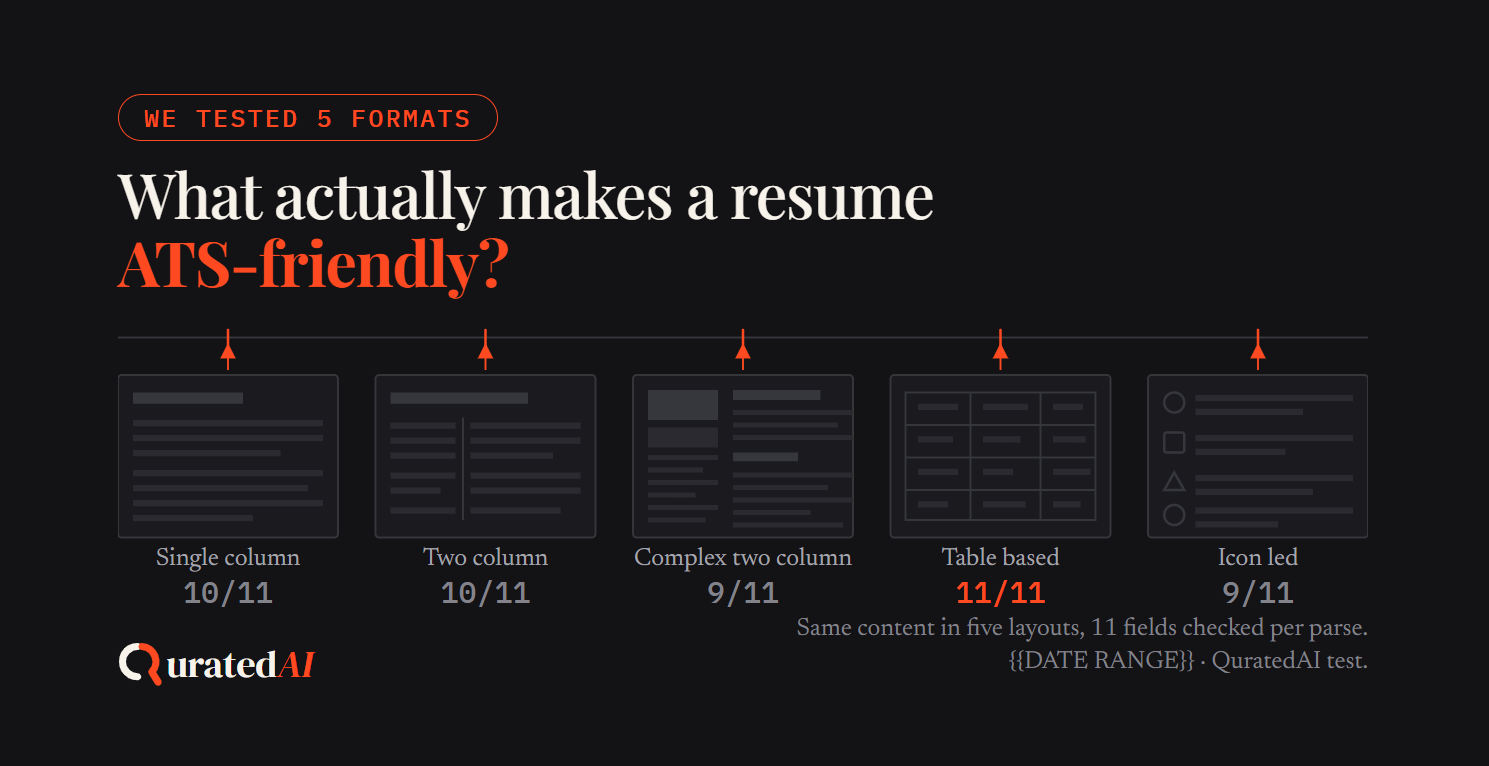
If you've searched for an ATS-friendly resume format, you've probably seen the same rules repeated: use one column, avoid tables, skip graphics, and keep your resume simple.
But those rules don't explain what the software is actually able to read.
To test that, we used the same resume content to create five formats: baseline single-column, two-column, complex two-column, graphic icons, and table-based.
We then ran each version through QuratedAI's machine-readability checker, which measures whether the file's text, contact information, section headings, dates, bullet points and other elements can be extracted correctly.
The results challenge some of the usual formatting advice. The table-based version passed 11 of 11 checks, while the two-column version passed 10 of 11. The complex layout and graphic-icon version scored 9 of 11, but their main problem was not failed text extraction. Their experience sections were converted into dense paragraphs, so the checker could no longer identify the content as bullet points.
That distinction matters because a resume can have a visually complex layout and still be machine-readable, while poorly structured text can create problems even when the words themselves are extractable.
This guide breaks down what an ATS needs to read, what happened in our five-format test, and which resume-formatting choices you can actually justify with evidence.
What Does "ATS-Friendly" Actually Mean?
An ATS-friendly resume is a resume whose information can be successfully extracted and interpreted by the software processing the application.
Resume parsing converts information from a document into structured candidate data. For example, a parser may identify your contact information, work experience, education, skills and employment dates.
That means visual appearance and machine readability are related, but they are not the same thing.
A recruiter can see a perfectly formatted resume on screen while the underlying text extraction contains missing characters, incorrect ordering or poorly separated information
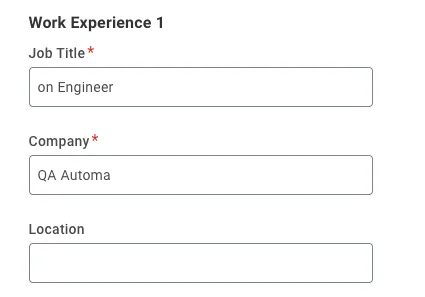
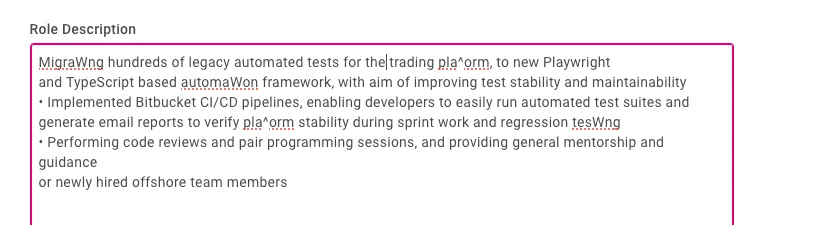
Example of a resume being parsed into an online application form. The user reported missing characters and misspelled words during the parsing process; the exact cause was not established in the discussion. Source: r/EngineeringResumes Reddit discussion
In the discussion, one commenter suggested that font ligatures might have contributed to the errors, but this was only a hypothesis and was not confirmed by the original poster. Reddit discussion and comments
The practical definition is therefore simple: an ATS-friendly resume should preserve the information a hiring system needs when the document is converted from a visual file into machine-readable data
What Does a Resume Parser Need to Read?
A parser needs to identify the pieces of information that make up a candidate's application.
In our checker, the machine-readability tests included:
- Whether text could be extracted
- Whether an email address was present
- Whether a phone number was present
- Whether a profile or portfolio link was present
- Whether standard sections such as experience, education and skills were identifiable
- Whether employment dates were in a parseable form
- Whether experience was presented as bullet points
- Whether achievement bullets contained numerical results
- Whether the extracted text stayed in a sensible order
This gives us a more useful way to evaluate resume formatting than simply asking whether a resume "looks ATS-friendly."
The question becomes:
What information survived the parsing process, and how accurately was it structured?
Does a Simple One-Column Resume Always Work Best?
Baseline resume
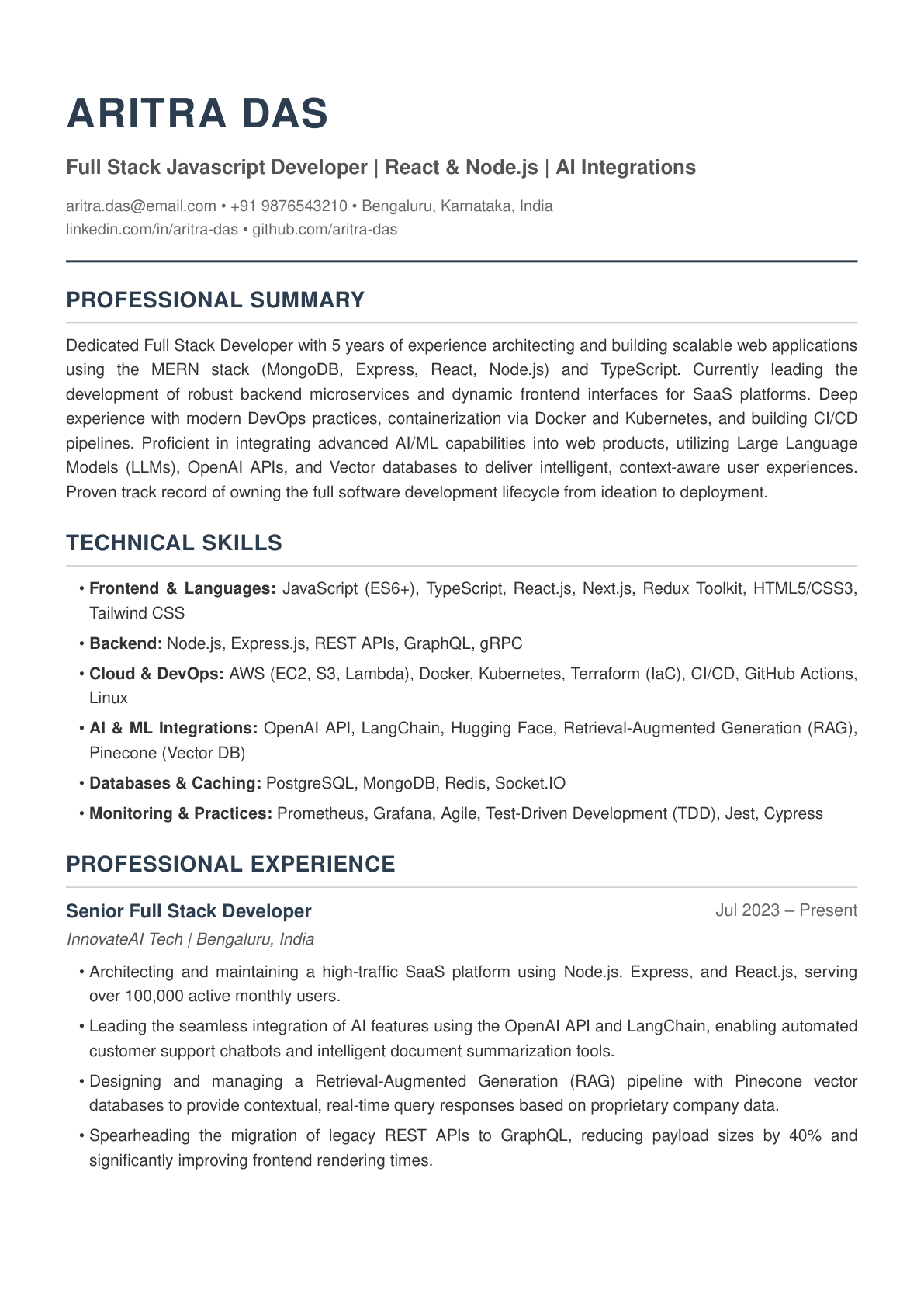
The baseline resume uses a conventional single-column structure with clearly separated sections and bullet-pointed experience.
We uploaded this version to QuratedAI's machine-readability checker, which returned 10 of 11 checks passed.
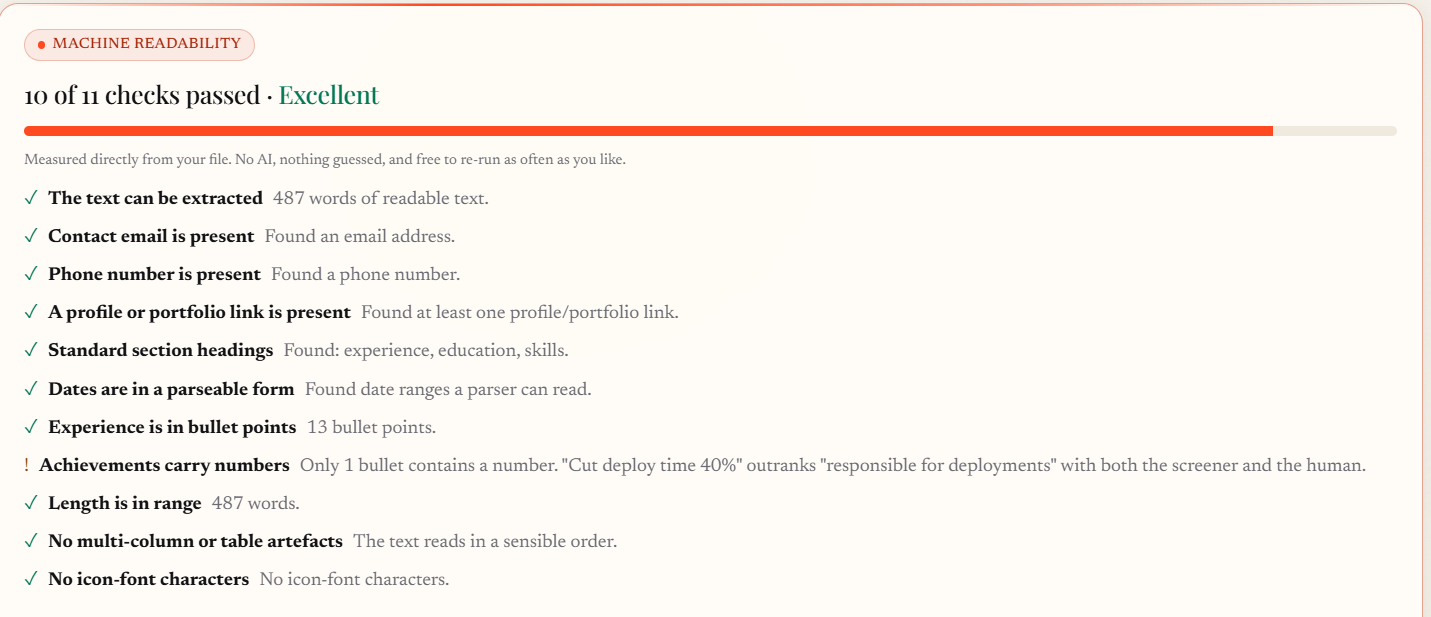
QuratedAI's machine-readability checker returned a result of *10 of 11 checks passed** for the baseline resume.*
The checker extracted 487 words, detected the candidate's email, phone number and profile link, recognized the Experience, Education and Skills headings, and identified parseable date ranges.
It also detected 13 experience bullet points and reported that the text was in a sensible order.
The only failed check was the achievement test: only one bullet contained a numerical result.
That means the single-column format provided strong machine readability in this test, but the checker still identified a content weakness.
Formatting alone did not determine the result.
Can an ATS Read a Two-Column Resume?
Two-column resume
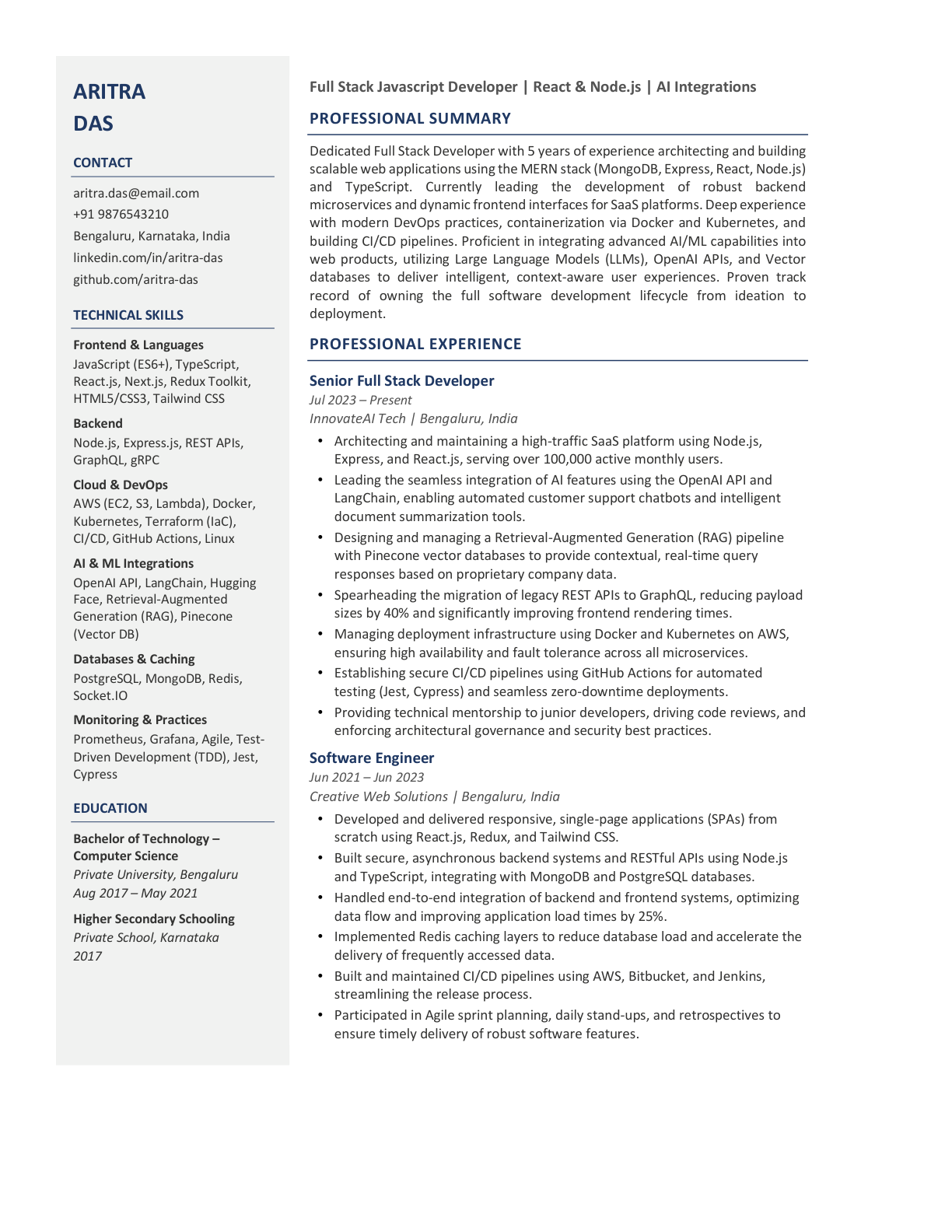
The two-column resume separates information across two vertical sections while keeping the experience content in bullet points.
Our two-column version passed 10 of 11 checks.
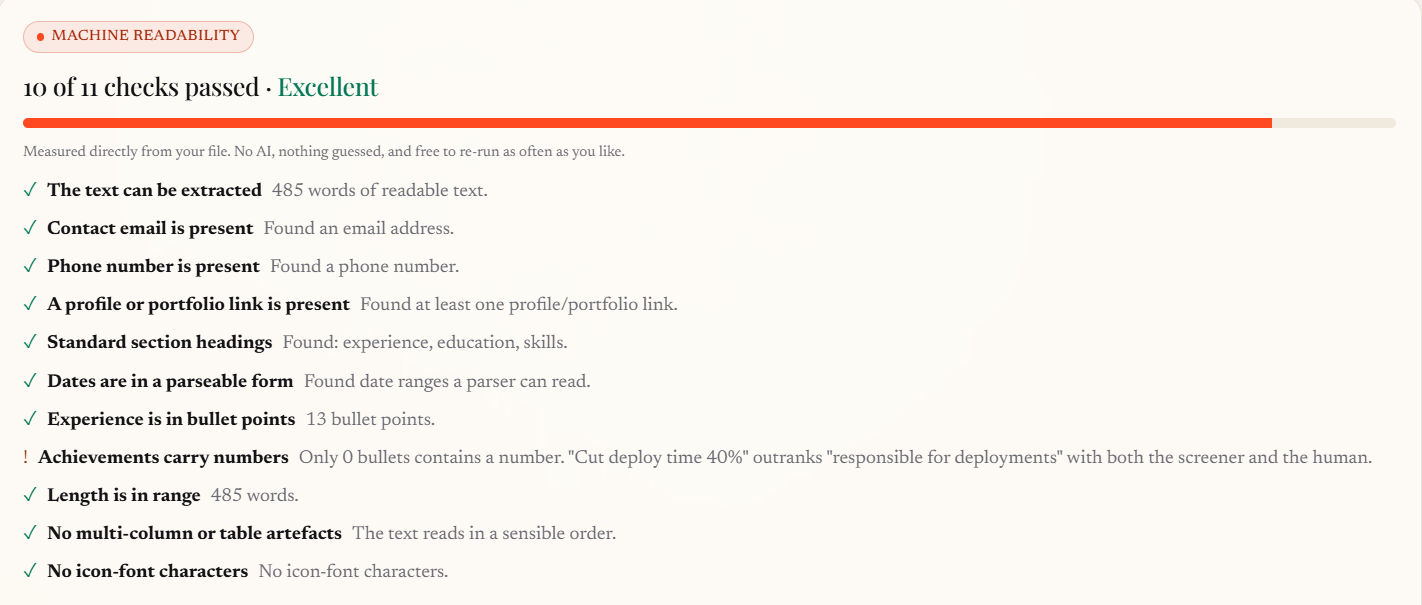
The checker successfully extracted the text, identified contact information, recognized standard headings and dates, detected 13 experience bullet points, and found no multi-column or table artefacts in the extracted text.
The checker specifically reported that the text read in a sensible order.
The only failed check was the achievement test because none of the bullets contained a numerical result.
This result does not prove that every ATS can process every two-column resume correctly.
It does show that a two-column layout did not prevent machine readability in this particular test.
What Happened With the Complex Two-Column Version?
Complex two-column resume
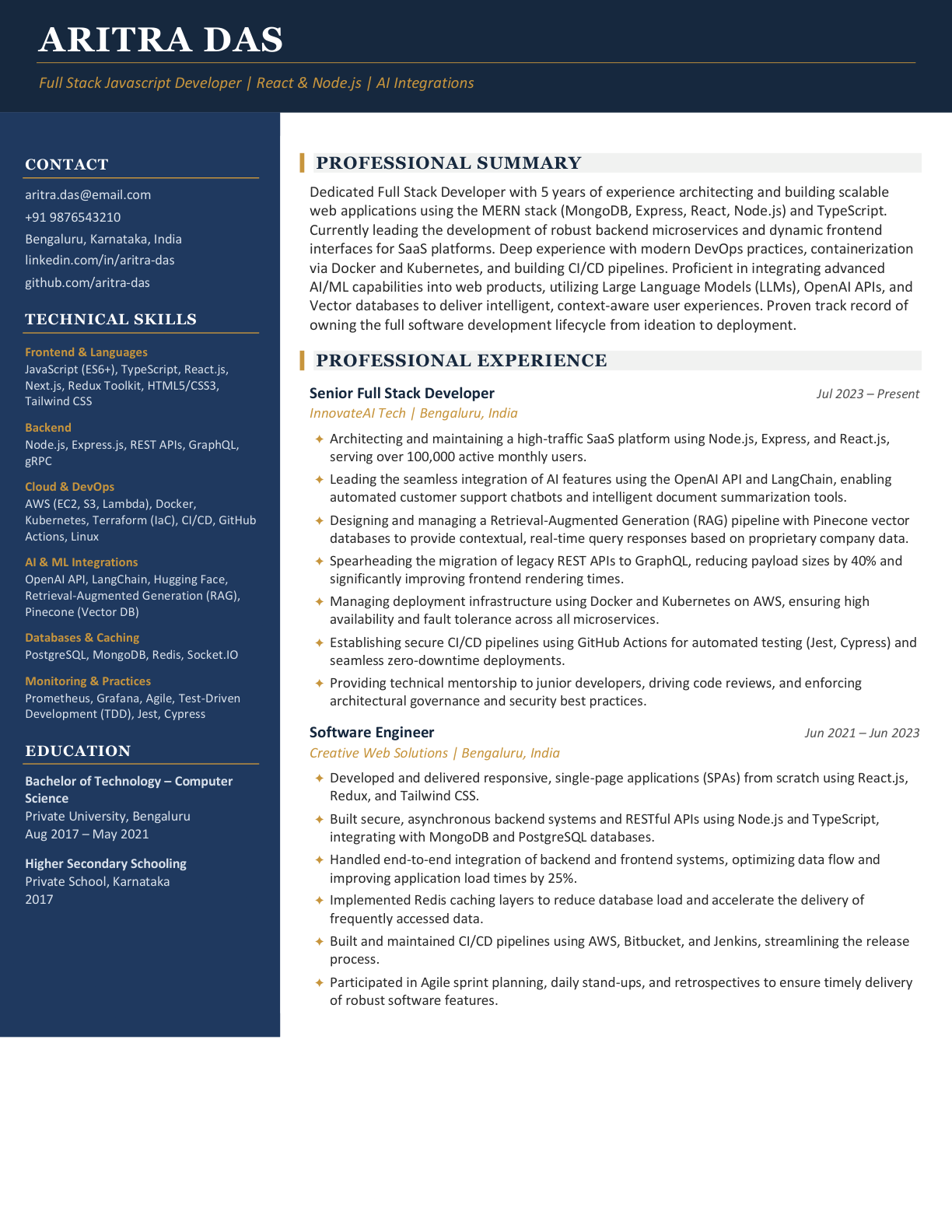
The complex two-column resume uses a more visually structured layout, with the experience content presented as dense paragraphs rather than separate bullet points.
The complex two-column version scored 9 of 11.
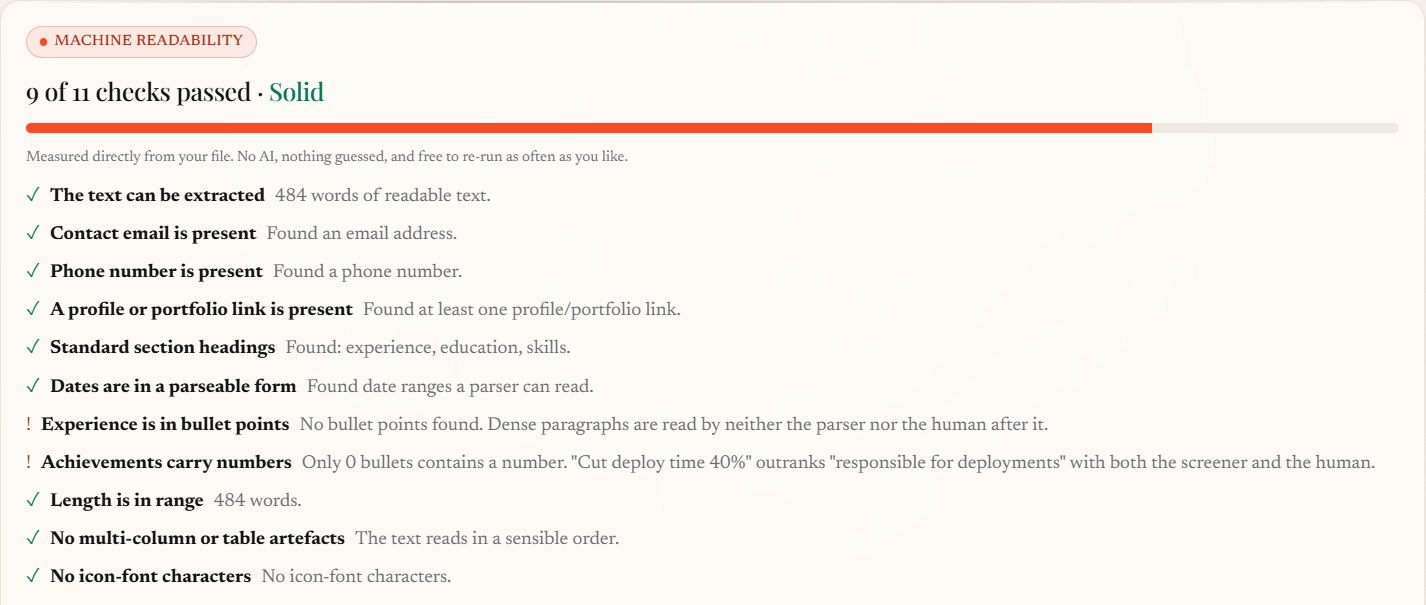
QuratedAI's machine-readability checker returned 9 of 11 checks passed for the complex two-column resume.
The checker extracted 484 words, found the candidate's contact information, recognized the standard headings and parsed the dates.
However, it detected zero bullet points. The checker specifically noted that dense paragraphs were not recognized as bullet points.
The achievement check also failed because the checker found zero bullets containing a number.
This gives us a more precise finding than "complex layouts are bad":
The software could extract the words, but it did not recognize the experience content as bullet-pointed achievements.
That is a machine-readability issue worth paying attention to.
Do Tables Make a Resume Unreadable?
Table-based resume
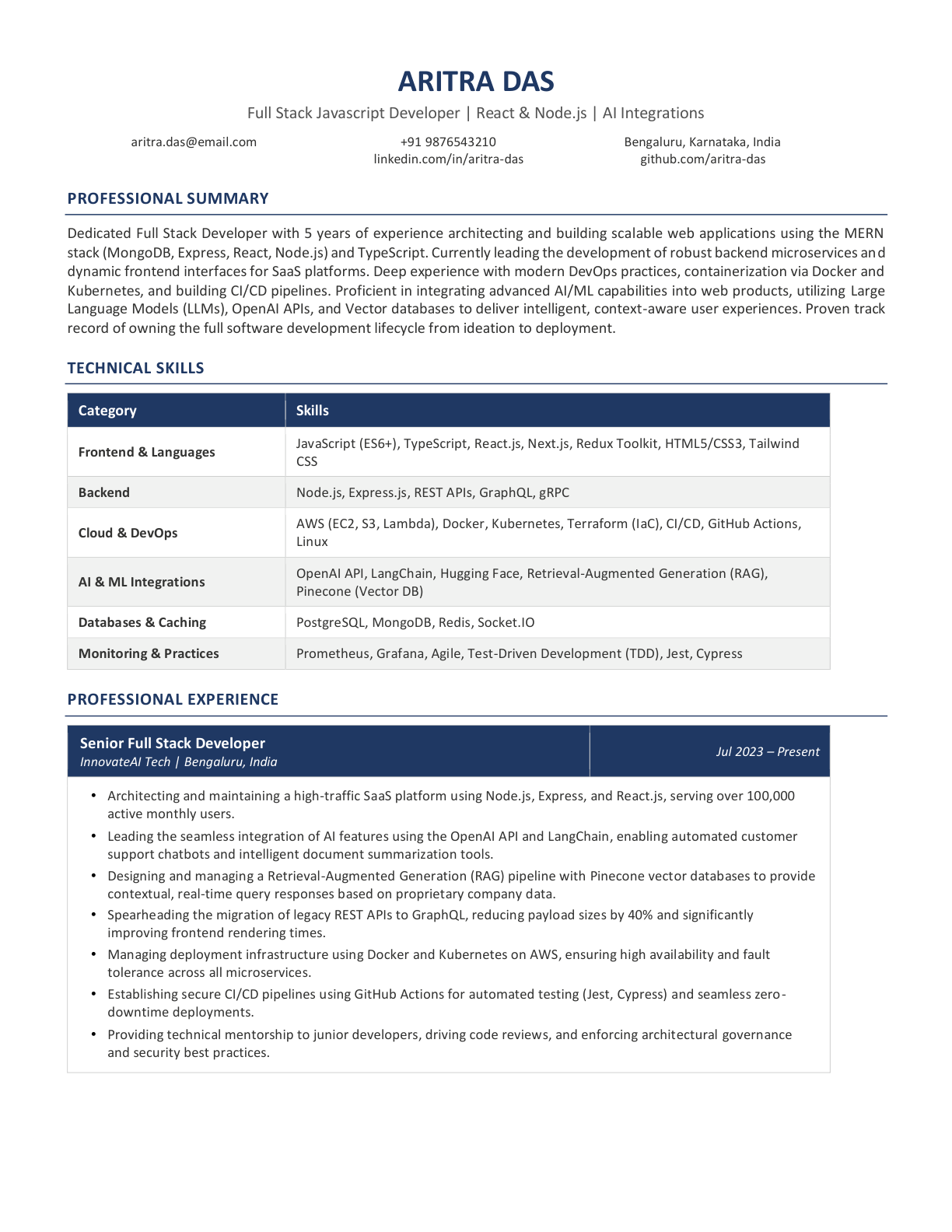
The table-based resume uses tables to organize the resume content while keeping the text and experience entries structured.
Our table-based resume produced the strongest result of the five tests.
It passed all 11 machine-readability checks.
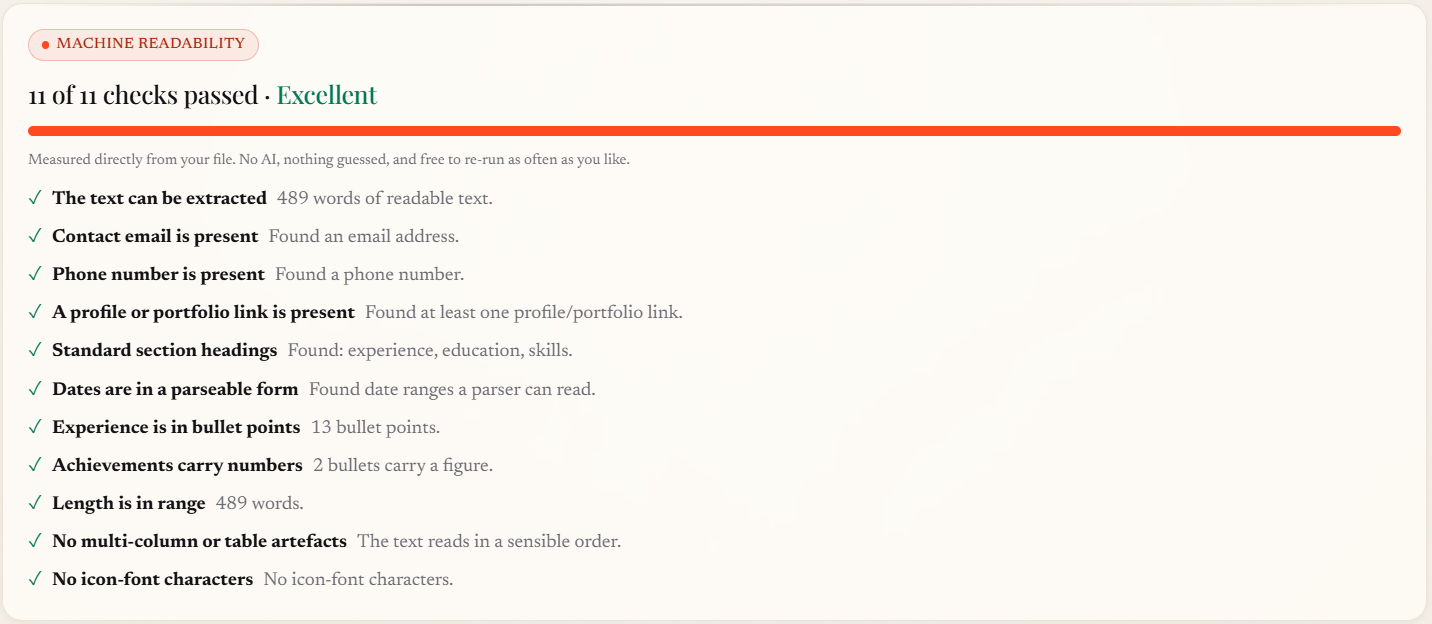
QuratedAI's machine-readability checker returned 11 of 11 checks passed for the table-based resume.
The checker extracted 489 words, detected the email, phone number and profile link, recognized Experience, Education and Skills, parsed the dates, identified 13 bullet points and found two bullets containing numerical achievements.
It also reported that the text read in a sensible order and detected no icon-font characters.
So our test does not support the blanket statement:
"ATSs cannot read resumes that use tables."
The accurate conclusion is narrower:
The table-based resume remained machine-readable in QuratedAI's checker.
That result should not be generalized to every ATS, because different systems can process files differently.
What Happened When We Added Graphic Icons?
Graphic-icon resume
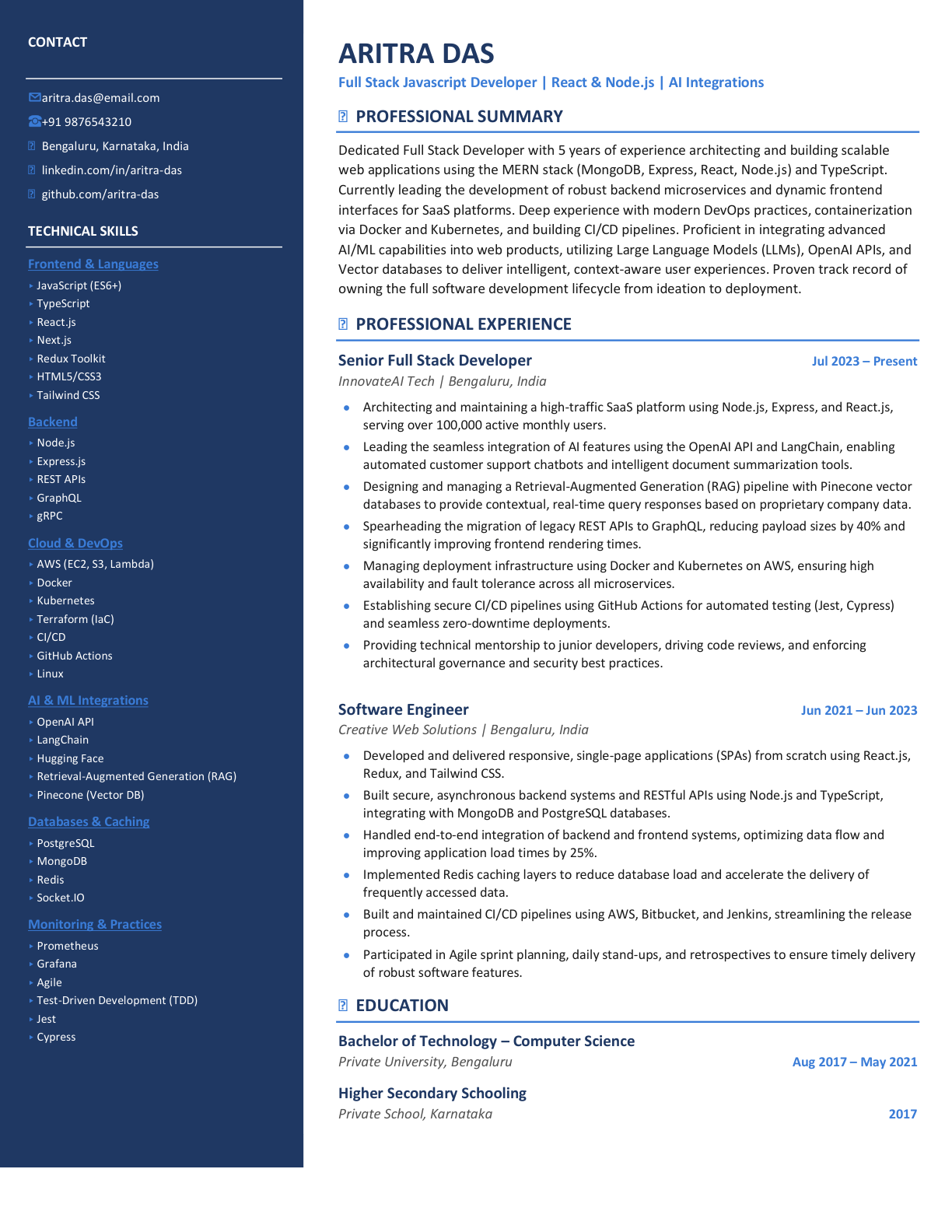
The graphic-icon version adds visual icons to the resume while keeping the main sections and content visible.
The graphic-icon version scored 9 of 11.
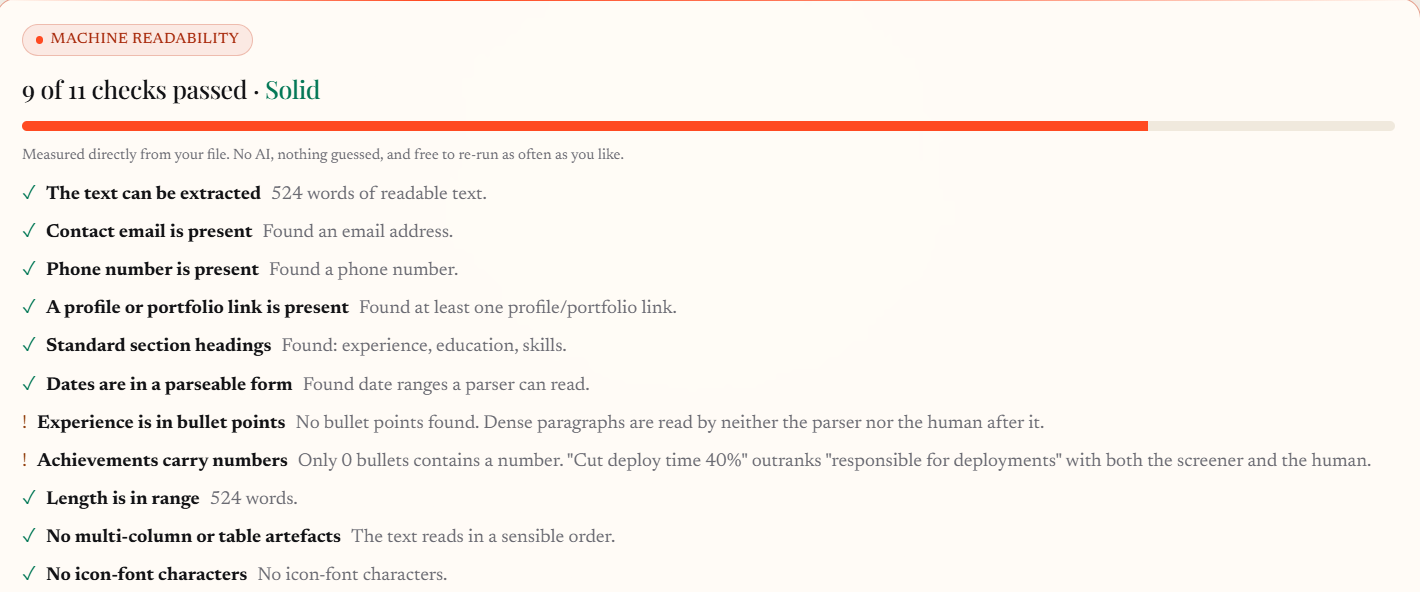
QuratedAI's machine-readability checker returned 9 of 11 checks passed for the graphic-icon resume.
The checker extracted 524 words and successfully detected the email, phone number, profile link, standard headings and dates.
It also found no icon-font characters.
The two failed checks were related to the structure of the experience section:
- No bullet points were detected.
- No achievement bullets containing numbers were detected.
So the icons themselves were not identified as the reason for the failed checks.
The more significant issue was that the experience content was represented as dense paragraphs.
What Did We Learn From All Five Formats?
| Resume format | Result | Main finding |
|---|---|---|
| Baseline / single-column | 10/11 | Strong extraction and structure; one numerical achievement detected |
| Two-column | 10/11 | Text remained readable and in sensible order; no numerical achievements detected |
| Complex two-column | 9/11 | Text was extracted, but experience paragraphs were not detected as bullet points |
| Table-based | 11/11 | All machine-readability checks passed, including bullet and numerical-achievement checks |
| Graphic icons | 9/11 | Text was extracted, but experience content was not detected as bullet points |
The table-based version produced the strongest result, passing all 11 machine-readability checks. The baseline and two-column versions both scored 10/11, while the complex two-column and graphic-icon versions scored 9/11.
The two 9/11 versions still had their text extracted successfully. Their failed checks were specifically related to how the experience content was structured: the checker did not recognize the dense paragraphs as bullet points.
There is also an important limitation: the five versions were not perfectly controlled. Some versions changed the number and structure of experience bullets, so the results cannot isolate layout as the only variable.
The experiment therefore shows how these five files behaved in QuratedAI's checker, not how every ATS will behave with every resume.
Want to see how your resume reads?
You don't have to guess whether your resume is machine-readable.
Run your resume through QuratedAI's ATS checker to see what the software can actually extract from your file.
Check your resume with QuratedAI →
You can use the results to identify potential parsing issues before submitting your next application.
Read more
- Check your resume's machine readability with QuratedAI →
- Add other relevant QuratedAI resume resources here once Guneet confirms the internal pages you want linked.
ats-friendly-resume · resume-formatting · ats-resume-checker · resume-parsing · job-applications · resume-tips · machine-readable-resume · quratedai